Kundli Matching: What the 36 Gunas Really Measure
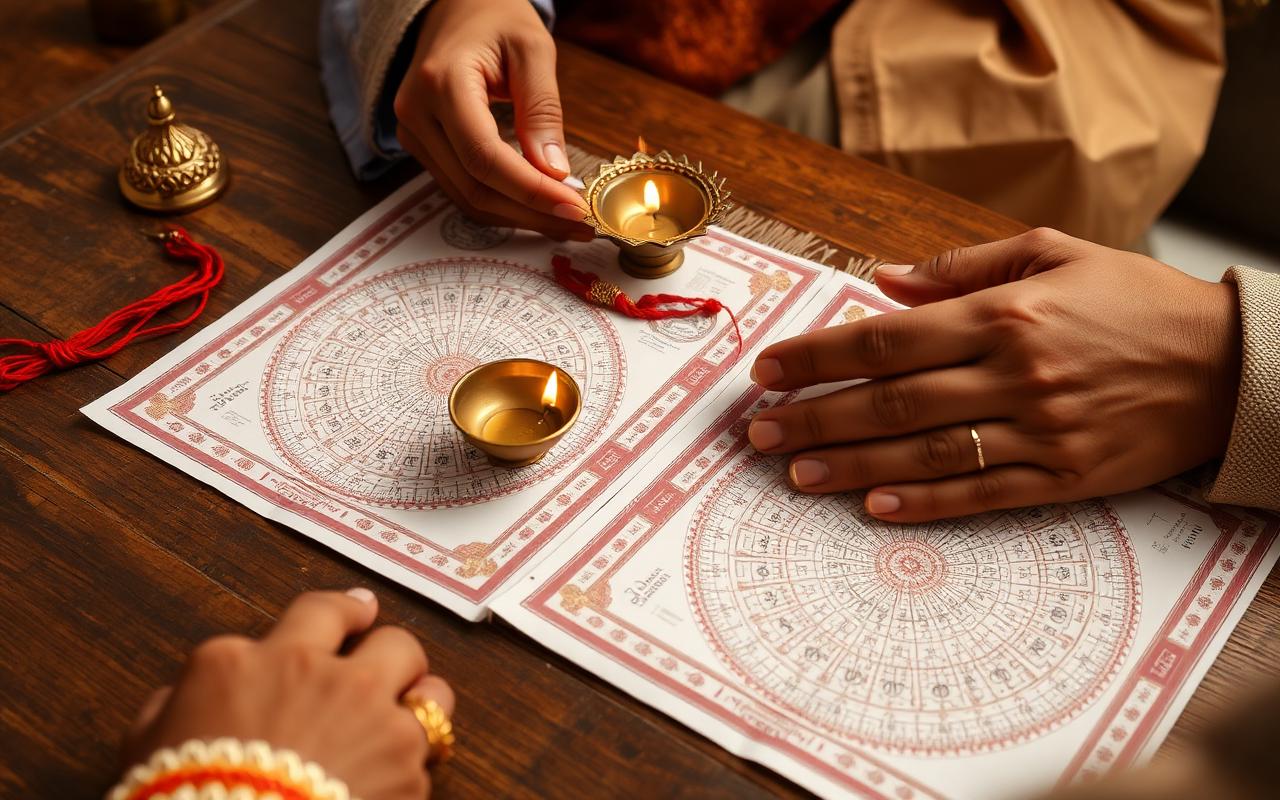
When two families sit down to discuss a marriage in India, the first piece of paper that comes out is usually the Kundli Milan report - a numerical score out of 36 that summarises the compatibility of the two charts. A score above 18 is considered acceptable, above 24 is excellent, and above 32 is very rare. Most couples, and many families, take the number and stop there. But the number is a summary, not the analysis. The analysis is what actually matters.
The 36-point system is called Ashtakoota Milan - the matching of the eight koots, or parameters. Each koot tests one specific dimension of compatibility, and each koot is weighted differently. The eight, with their weights, are: Varna (1 point), Vashya (2 points), Tara (3 points), Yoni (4 points), Graha Maitri (5 points), Gana (6 points), Bhakoot (7 points), and Nadi (8 points). The weights ascend deliberately - the deeper the dimension being tested, the more it matters.
Varna (1 point) tests spiritual compatibility. It classifies each chart's Nakshatra into one of four varnas - Brahmin (priestly), Kshatriya (warrior), Vaishya (merchant), or Shudra (worker). Traditionally, a man's varna should be higher than or equal to the woman's varna. In modern application, this koot has lost most of its weight - most contemporary astrologers consider it ceremonial.
Vashya (2 points) tests mutual influence - who will naturally have more sway in the relationship. The Vashya classifications are Manav (human), Vanchara (wild animal), Chatushpad (four-legged animal), Jalachara (water creature), and Keet (insect). The compatibility table is intricate but the underlying logic is simple - certain temperaments naturally dominate others, and a good match has matching or complementary Vashyas.
Tara (3 points) tests longevity and health within the marriage. It is computed from the relative positions of the two Nakshatras counting from each other. There are nine Tara categories, three of which are auspicious, three neutral, and three inauspicious. A good Tara compatibility predicts a marriage in which both partners' health and longevity are supported by the bond itself.
Yoni (4 points) tests sexual and instinctive compatibility. Each Nakshatra is assigned an animal (horse, elephant, sheep, snake, dog, cat, rat, cow, buffalo, tiger, deer, monkey, lion, mongoose) and there is a precise table of which yonis are friendly, neutral, or hostile to each other. Snake and mongoose, for example, are mortal enemies - a Snake yoni and a Mongoose yoni in a marriage is considered a severe Yoni Dosha regardless of other scores.
Graha Maitri (5 points) tests mental and intellectual compatibility. It is computed from the relationship between the lords of the two Rashis (Moon signs). The classical planetary friendship table (each planet has friends, enemies, and neutrals) is applied. A high Graha Maitri score predicts a marriage in which both partners think along similar lines and communicate easily.
Gana (6 points) tests temperament compatibility. As discussed in the Nakshatra article, each Nakshatra is classified as Deva, Manushya, or Rakshasa Gana. Deva and Deva is excellent. Deva and Manushya is acceptable. Rakshasa and Rakshasa is acceptable. Deva and Rakshasa is the most difficult combination - different fundamental wiring.
Bhakoot (7 points) tests emotional and financial outcomes - the practical, lived stability of the marriage. It is computed from the positions of the two Moon signs relative to each other. Certain combinations (such as 6/8 or 2/12) are considered Bhakoot Dosha and predict ongoing friction in family wealth, children, and emotional rapport. Bhakoot Dosha is one of the more serious flags in a Kundli Milan.
Nadi (8 points) tests genetic and progeny compatibility. The 27 Nakshatras are divided into three Nadis - Adi (first), Madhya (middle), and Antya (last). Two charts in the same Nadi (Nadi Dosha) is considered the single most serious flag in Kundli Milan. Classical texts warn against same-Nadi marriages on grounds that range from poor progeny to health issues for the children.
A 'good' score of 24 or above is not the end of the analysis. A couple can score 28 on Ashtakoota and still have Nadi Dosha or Bhakoot Dosha that overrides the high score. Conversely, a couple can score 18 and have an excellent marriage because the doshas are absent and the deeper compatibility is strong. A competent astrologer reads the koots individually, not just the total.
Beyond Ashtakoota, a complete Kundli Milan also examines: Manglik status of both charts and whether the doshas cancel; the strength and placement of the 7th house lord in both charts (the karaka of marriage); the condition of Venus in a man's chart and Jupiter in a woman's; the Vimshottari Dasha sequence in the years immediately after marriage; and the Navamsa (D9) chart, which Vedic astrology considers more important for marriage than the main chart.
Remedies exist for most doshas. Nadi Dosha can be partially neutralised through specific charitable acts and a Kumbh Vivah. Bhakoot Dosha is mitigated through a 16-day Bhakoot Shanti ritual. Mangal Dosha cancellations are checked carefully. A modern, well-trained astrologer will not break a match on doshas alone - they will check for cancellations and prescribe remedies.
At Shree Pitambra Vidya Gurukulam, every Kundli Milan report is a long-form document, not a single number. We break down each of the eight koots, identify every dosha by name, list every cancellation that applies, examine the Navamsa, and lay out the remedies in the order they should be performed. Marriage is too important a decision to make off a number alone.
Want personal guidance on this?
Speak to an acharya for a chart-based consultation tailored to your situation.
Frequently Asked Questions
Which zodiac does Vedic astrology use?+
Vedic astrology uses the sidereal zodiac anchored to the fixed stars, with the Lahiri ayanamsa as the Government of India standard. This differs from the Western tropical zodiac by roughly 24 degrees today.
How accurate does my birth time need to be?+
Within a few minutes ideally. Small birth-time errors shift house cusps, Navamsa placements, and Dasha start dates. If your time is uncertain, mention it when booking so the acharya can work with the most reliable chart factors.
Is the guidance in "Kundli Matching: What the 36 Gunas Really Measure" authentic and lineage-based?+
Yes. Every article on VedicAstroTalk is written by lineage-trained acharyas of Shree Pitambra Vidya Gurukulam and cross-checked against classical Sanskrit texts such as Brihat Parashara Hora Shastra, Phaladeepika, and Jaimini Sutras before publication.
How can I get a personal reading based on this topic?+
Book an Astrological Consultation from our consultations page. You will receive a sidereal chart (Lahiri ayanamsa), a 20-year Vimshottari Dasha map, and a written remedial protocol tailored to your birth details.