Shiva and the Five Elements: The Pancha Bhuta Lingas
Indian philosophy teaches that the entire physical universe - including the human body - is made of five great elements, the Pancha Mahabhutas: prithvi (earth), apas (water), tejas (fire), vayu (air), and akasha (ether or space). Each element is a stage in the descent of pure consciousness into denser and denser form. Akasha is the most subtle. Prithvi is the most dense. The human body is a stable composition of all five.
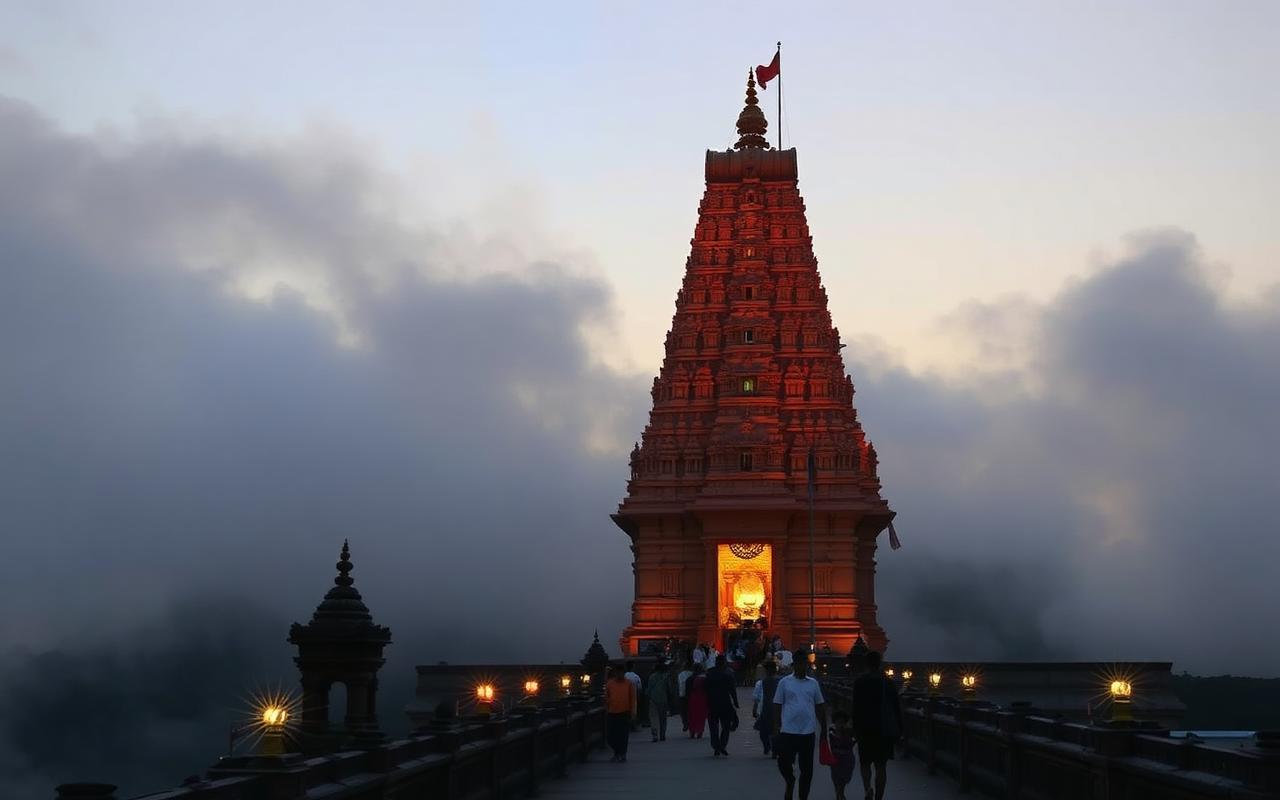
Shiva, in the deepest theology, is the consciousness that pervades and underlies all five elements. He is not a sixth element; he is the field in which the five appear. To honour this, the tradition built five temples across South India, one for each element, where Shiva is worshipped specifically as the consciousness within that element. Together they are called the Pancha Bhuta Lingas. Pilgrimage to all five, in sequence, is considered one of the most complete spiritual purifications available in the Hindu tradition.
Earth - Prithvi Linga - Ekambareshwar Temple, Kanchipuram, Tamil Nadu. The Linga at Kanchipuram is made of sand. According to legend, Parvati moulded the Linga from the sand of the Kampa river to worship her husband. The temple complex is vast, with an inner mango tree said to be over 3,500 years old, each branch bearing fruit of a different taste - said to symbolise the four Vedas.
Water - Jala Linga - Jambukeshwar Temple, Tiruchirapalli (Trichy), Tamil Nadu. The Linga at Jambukeshwar is permanently surrounded by water - an underground spring beneath the sanctum keeps it perpetually wet. The temple is also a Sri Vidya temple, with the goddess Akilandeshwari worshipped according to specific tantric protocols, including an elaborate noon ritual that has been performed daily for centuries.
Fire - Agni Linga - Arunachaleshwar Temple, Tiruvannamalai, Tamil Nadu. The Linga at Tiruvannamalai represents Shiva as a column of fire. According to the Skanda Purana, Shiva manifested here as an infinite column of flame to settle a dispute between Brahma and Vishnu over which of them was supreme. Neither could find the top or the bottom of the column. The hill of Arunachala, towering over the temple, is itself worshipped as Shiva - devotees do a 14-kilometre pradakshina around the hill on every full moon. Ramana Maharshi, one of the great modern sages of India, lived at Arunachala for over fifty years and taught that the hill is consciousness itself.
Air - Vayu Linga - Kalahasti Temple, Andhra Pradesh. The Linga at Kalahasti is associated with the wind. Inside the sanctum, a single oil lamp burns continuously, and its flame flickers in patterns that have no apparent draft source - said to be Shiva's breath. The temple is also the principal Rahu-Ketu temple of South India; pilgrims with severe nodal afflictions perform Rahu-Ketu Sarpa Dosha Pujas here that are considered uniquely effective.
Ether - Akasha Linga - Chidambaram Nataraja Temple, Tamil Nadu. The shrine at Chidambaram has no Linga at all. Behind a curtain in the inner sanctum is simply empty space, hung with a few golden bilva leaves. This is the most subtle representation in the entire Hindu tradition - Shiva as pure space, without form. The temple is also the principal Nataraja temple, where Shiva is worshipped as the cosmic dancer whose dance maintains the rhythm of the universe. The famous bronze Nataraja statue you have seen in museums comes from this lineage.
Pilgrimage to the five temples, traditionally done in the order Earth-Water-Fire-Air-Ether, takes about ten days if done seriously - with one or two full days at each temple for the principal abhishekam and ritual. Each temple has its own dress code, its own ritual schedule, and its own peak season. The southern winter (November to February) is the ideal pilgrimage window.
What is the deeper logic of the pilgrimage? The five elements correspond to the five lower chakras: muladhara (earth), svadhisthana (water), manipura (fire), anahata (air), and vishuddha (ether). Worshipping Shiva in each element, in sequence, is a slow purification of each chakra. By the end of the pilgrimage, the pilgrim is said to have re-aligned the entire elemental composition of their body and field.
Even if you cannot do the full pilgrimage, you can do a partial version. Chant the panchakshara mantra Om Namah Shivaya 108 times each morning, holding one element in your awareness for each round: earth on Monday, water on Tuesday, fire on Wednesday, air on Thursday, ether on Friday. On the weekend, hold all five together. Over time, the inner pilgrimage moves with the same rhythm as the outer one.
The Pancha Bhuta Lingas remind us that Shiva is not in the temple - Shiva is the temple, the stone, the priest, the devotee, and the empty space between them. The pilgrimage is just an elaborate way of remembering what was never not true.
Want personal guidance on this?
Speak to an acharya for a chart-based consultation tailored to your situation.
Frequently Asked Questions
Is the guidance in "Shiva and the Five Elements: The Pancha Bhuta Lingas" authentic and lineage-based?+
Yes. Every article on VedicAstroTalk is written by lineage-trained acharyas of Shree Pitambra Vidya Gurukulam and cross-checked against classical Sanskrit texts such as Brihat Parashara Hora Shastra, Phaladeepika, and Jaimini Sutras before publication.
How can I get a personal reading based on this topic?+
Book an Astrological Consultation from our consultations page. You will receive a sidereal chart (Lahiri ayanamsa), a 20-year Vimshottari Dasha map, and a written remedial protocol tailored to your birth details.