How to Set Up a Puja Room at Home: A Step-by-Step Guide
Every Indian home has a puja space, but very few homes have a working puja space. The difference is that a working puja space is set up correctly, maintained daily, and used. A puja space that becomes a dumping ground for occasional ritual items, dusted only on festivals, is essentially decorative. This article is a step-by-step guide to setting up a puja room that actually functions.
Direction first. The ideal location is the north-east corner of the home - the Ishanya - which Vastu considers the zone of divinity. Within the puja room itself, the deities should face west, so that you face east while praying. East is the direction of the rising sun, of new beginnings, and of natural alignment with the Earth's energetic field.
If a north-east location is not available, the next best options are the east wall of any clean room, or the north wall. Avoid placing the puja room under a staircase (it suppresses the energy), directly adjacent to a bathroom (water and waste interfere with the field), or in a bedroom (the puja energy and the sleep energy do not mix well). If a bedroom is the only option, partition the puja space with a curtain that can be drawn during sleep hours.
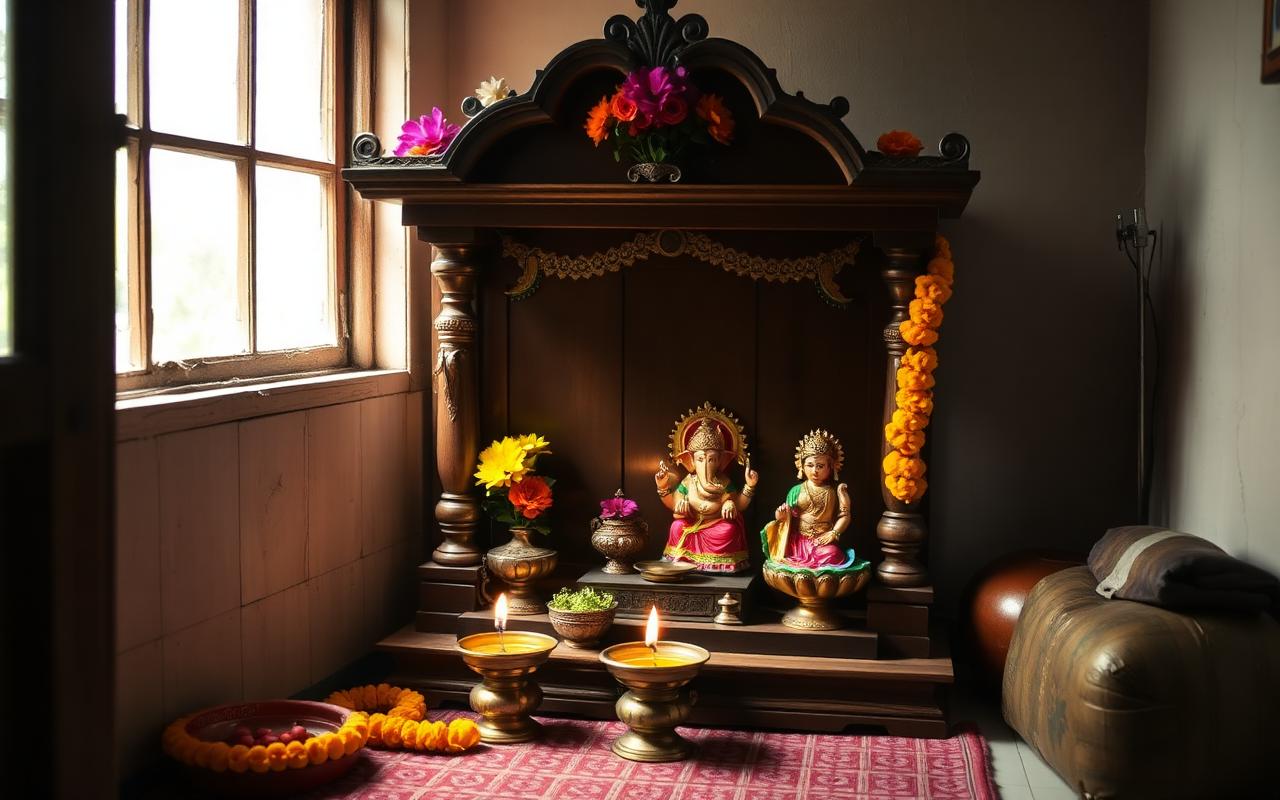
Build the platform. The puja altar should be raised - never place idols or images directly on the floor. A simple wooden or marble platform works. Many families use a wooden mandir (a small temple-shaped cabinet) bought from a traditional craftsman; the cabinet has multiple tiers and built-in doors, which keeps the space clean and contained.
Idols and images. Choose carefully. Classical guidance: idols in a home puja room should be smaller than the length of your palm. Larger idols belong in temples, where they receive the daily multi-hour ritual care they require. A small home idol is easier to maintain and bears the household energy more comfortably.
Avoid keeping more than one idol of the same deity (the energies can interfere). Avoid keeping idols that are chipped, broken, or visibly damaged - a damaged idol is energetically incomplete and should be respectfully immersed in flowing water with a short ritual. Avoid photos of deceased family members in the puja room - ancestor worship has its own zone, the Pitr corner, which is traditionally the south wall.
Standard household pantheon: most homes keep some combination of Ganesha (always to the left), the Ishta-devata (the family deity, in the centre), Lakshmi (for prosperity), Saraswati (for learning), Hanuman (for courage and protection), and a small Shiva lingam or Vishnu image. Sectarian families (Shaiva, Vaishnava, Shakta) will weight their pantheon accordingly.
Daily ritual. The minimum viable daily practice takes ten minutes. Bathe before doing it (or at least wash hands, face, and feet). Light a ghee lamp (or a sesame oil lamp on Saturdays). Light a stick of incense. Ring a small bell. Offer fresh water in a small copper or silver vessel. Offer flowers if available - fresh, never plastic. Chant a short stotra or your Ishta mantra 11, 21, or 108 times.
Once a week - usually on Friday for Lakshmi or Tuesday for Hanuman, depending on the family deity - perform an extended ritual lasting 30 to 45 minutes. Include a fuller stotra (Sri Suktam, Hanuman Chalisa, Vishnu Sahasranama), an offering of naivedya (cooked food, fruits, or sweets), and a few minutes of silent meditation at the end.
On the new moon (Amavasya) and the full moon (Purnima), the puja becomes a fuller event with extended chants, a longer naivedya, and ideally an ancestor remembrance on Amavasya.
Maintenance. Clean the puja space at least once a week - wipe down the idols with a soft cloth, refill the oil in the lamps, replace the flowers, dispose of dry ash and used incense respectfully (do not throw in regular rubbish; flowing water or under a tree is the traditional disposal). Re-energise the principal idols once a year on a chosen auspicious day with a fresh abhishekam.
Consistency outperforms elaborateness. A family that does a simple ten-minute puja every single day will build more spiritual momentum than a family that does an elaborate Friday puja monthly. The energy field of a puja room compounds. After a few months of daily practice, you will notice that simply walking past the puja room settles your nervous system - that is the field at work.
If you are setting up a puja room for the first time, choose an auspicious Muhurta - a Thursday morning during Shukla Paksha is a good default - and have a small Griha Pravesh-style ritual to install the deities. Many of our Gurukulam clients have us perform this initial installation; once it is set up correctly, the daily maintenance is straightforward.
Want personal guidance on this?
Speak to an acharya for a chart-based consultation tailored to your situation.
Frequently Asked Questions
Which day is best for starting a spiritual practice?+
Thursdays (Guruvar) and the Shukla Paksha Panchami tithi are traditionally most auspicious for initiating any sadhana. Your personal Nakshatra also influences the ideal start day.
Is the guidance in "How to Set Up a Puja Room at Home: A Step-by-Step Guide" authentic and lineage-based?+
Yes. Every article on VedicAstroTalk is written by lineage-trained acharyas of Shree Pitambra Vidya Gurukulam and cross-checked against classical Sanskrit texts such as Brihat Parashara Hora Shastra, Phaladeepika, and Jaimini Sutras before publication.
How can I get a personal reading based on this topic?+
Book an Astrological Consultation from our consultations page. You will receive a sidereal chart (Lahiri ayanamsa), a 20-year Vimshottari Dasha map, and a written remedial protocol tailored to your birth details.