Kavach and Yantra: The Geometry of Divine Protection
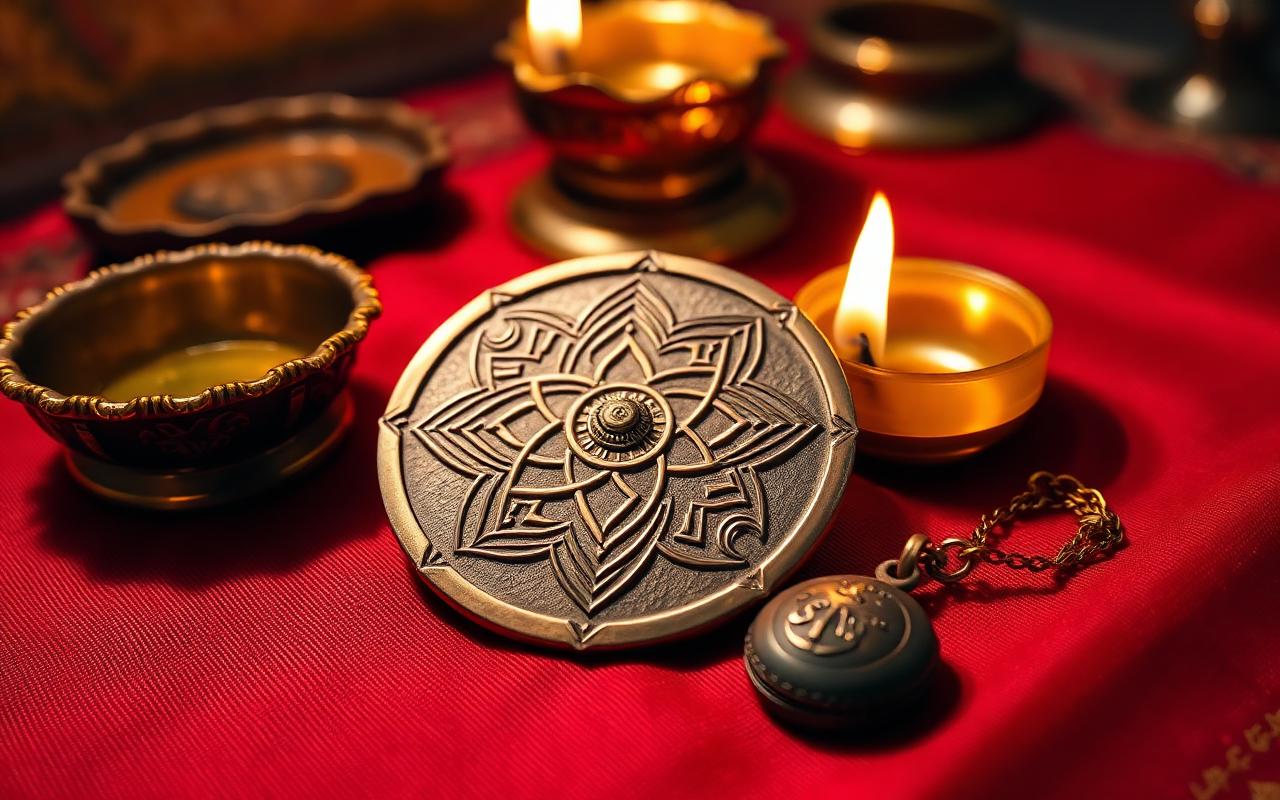
Walk into any traditional Hindu home and you will see a small metal locket on a child's neck, an engraved copper plate above the main door, a small yantra under the bed of a newborn, a silver pendant on the bride at her wedding. These are Kavachas and Yantras - protective instruments that the tradition has used for thousands of years.
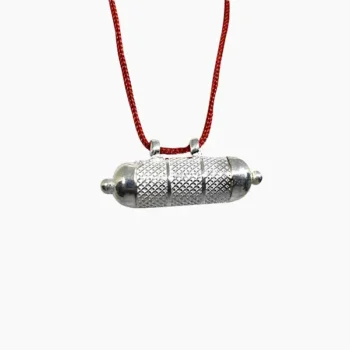
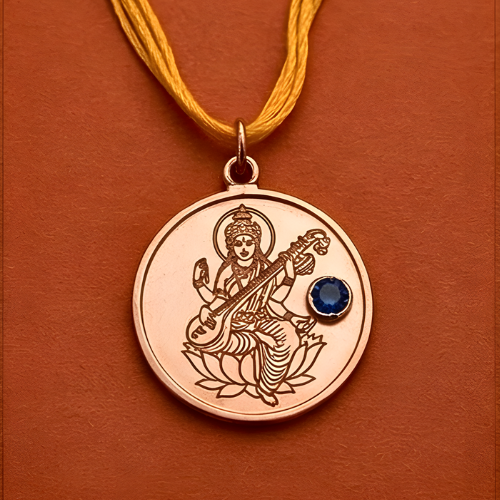
The difference is in the form. A Yantra is a sacred geometric diagram inscribed on a flat sheet of metal - copper, silver, or gold - and installed in a fixed location, usually in the puja room or at the entrance of a home or business. A Kavach is a small metal locket or thin plate containing one or more Yantras, mantras, or planetary symbols, sealed and worn on the body - around the neck, on the upper arm, or kept in a wallet or purse.
The most famous Yantras are the Sri Yantra (for Lakshmi, wealth, and beauty), the Mahamrityunjaya Yantra (for healing and protection from untimely death), the Navagraha Yantra (for balancing all nine planets), the Kuber Yantra (for accumulated wealth), the Vyapar Vriddhi Yantra (for business growth), the Vastu Yantra (for harmonising a home or office space), the Bagalamukhi Yantra (for protection from enemies), and the Sudarshan Yantra (for protection from all evil influences).
Each Yantra is a precise diagram. The Sri Yantra contains nine interlocking triangles, with five pointing downwards (Shakti) and four pointing upwards (Shiva), surrounding a central bindu - the seed point of all creation. The geometry is not decorative. It is a mathematical representation of the cosmos contracted into a single image. Looking at a Sri Yantra correctly drawn is itself a meditation.
An engraved Yantra is, however, only metal until it is consecrated. The classical procedure is called Prana Pratishtha - the installation of life-breath. A qualified priest performs a multi-hour ritual involving the relevant Bija mantras, specific mudras, the placement of the Yantra on a clean cloth in a properly oriented direction, the offering of flowers, incense, lamp, naivedya, and finally the chanting of the principal mantra a prescribed number of times (often 1,008). Only after this ritual does the Yantra become a transmitting instrument.
An unconsecrated Yantra purchased from a marketplace or printed in a book is metal or paper. It has no transmitting capacity. Some traditions teach that wearing or installing an unconsecrated Yantra is worse than wearing none, because it gives the wearer a false sense of protection. Always source Yantras from a qualified priest or a reputable institution that performs the full Prana Pratishtha.
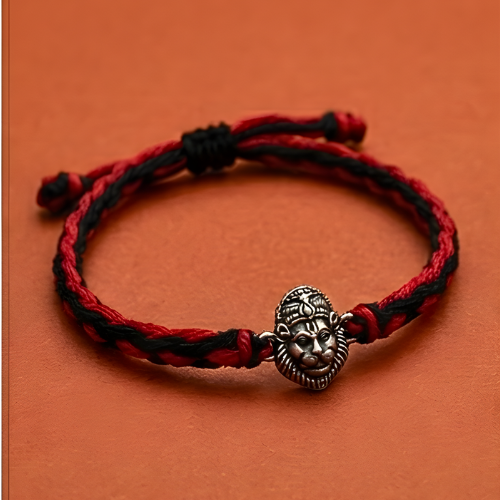
Kavachas are usually built for a specific outcome. Common types: Rozgar Kavach (for employment and career stability), Vidya Kavach (for students and learning), Suraksha Kavach (general protection, often given to children), Vyapar Vriddhi Kavach (business growth), Stree Suraksha Kavach (for the safety of women), Santan Prapti Kavach (for fertility and progeny), and Tantra Raksha Kavach (protection from black magic and negative energies).
A Kavach is built by combining the relevant Yantra, the Bija mantras of the planets involved, and sometimes specific herbs or sacred materials, all sealed inside a metal locket. The entire Kavach is then consecrated through the appropriate ritual, often timed to a favourable Muhurta. Once consecrated, the Kavach is worn or carried by the person for whom it was built, ideally for at least a year before being recharged.
Kavachas are not interchangeable. A Kavach made for one person carries the energetic signature of that person's chart and intention. Do not lend a Kavach to a family member. Do not buy a Kavach 'in general' from a roadside stall - it has not been built for you.
Care matters. Keep the Kavach clean. Remove it before bathing if it is on a chain (the metal will tarnish), although traditional silver Kavachas worn on a black thread can stay on through bathing. Remove it before consuming non-vegetarian food or alcohol, and before entering a cremation ground. Re-energise it every year on the anniversary of its first wearing.
At Shree Pitambra Vidya Gurukulam, every Kavach and Yantra is built individually for the client, consecrated on the appropriate Muhurta by our acharyas, and dispatched with the specific mantras you should chant to maintain it. It is not the metal that protects you - it is the mantra inside it, kept alive by your own daily practice.
Want personal guidance on this?
Speak to an acharya for a chart-based consultation tailored to your situation.
Frequently Asked Questions
Is the guidance in "Kavach and Yantra: The Geometry of Divine Protection" authentic and lineage-based?+
Yes. Every article on VedicAstroTalk is written by lineage-trained acharyas of Shree Pitambra Vidya Gurukulam and cross-checked against classical Sanskrit texts such as Brihat Parashara Hora Shastra, Phaladeepika, and Jaimini Sutras before publication.
How can I get a personal reading based on this topic?+
Book an Astrological Consultation from our consultations page. You will receive a sidereal chart (Lahiri ayanamsa), a 20-year Vimshottari Dasha map, and a written remedial protocol tailored to your birth details.