The Mahamrityunjaya Mantra: Meaning, Method, and Miracles
Of all the mantras that the Vedic tradition has given the world, only a handful are universally recognised. The Gayatri is the most famous. The Mahamrityunjaya is the second. It is chanted in hospitals, in temples, at deathbeds, at the start of long journeys, and during difficult planetary transits. It is one of the few mantras that classical texts say has no contraindications - anyone can chant it, anytime, for any purpose, and the chant itself does the work.
The full mantra is: Om Tryambakam Yajamahe Sugandhim Pushtivardhanam, Urvarukamiva Bandhanan Mrityormukshiya Maamritat. Word by word: Om - the primal sound. Tryambakam - to the three-eyed one (Shiva). Yajamahe - we worship. Sugandhim - the fragrant one. Pushtivardhanam - the one who nourishes all beings. Urvarukamiva - like a cucumber. Bandhanan - from the bondage. Mrityor - of death. Mukshiya - may we be liberated. Ma amritat - but not from immortality.
The image at the heart of the mantra is beautiful. A ripe cucumber falls effortlessly from its vine when it is ready - without resistance, without pain, with no rupture of the plant. The mantra prays that when the time comes for the soul to leave the body, it falls away just as gracefully. It is not a prayer to avoid death. It is a prayer to be liberated from the bondage of death - meaning the cycle of rebirth - without losing the immortality that is our true nature.
Classical texts attribute the mantra to the sage Markandeya, who chanted it to escape Yama, the lord of death, when his appointed lifespan ended at age sixteen. Shiva himself intervened, granted Markandeya eternal life, and the mantra has been the standard healing chant ever since.
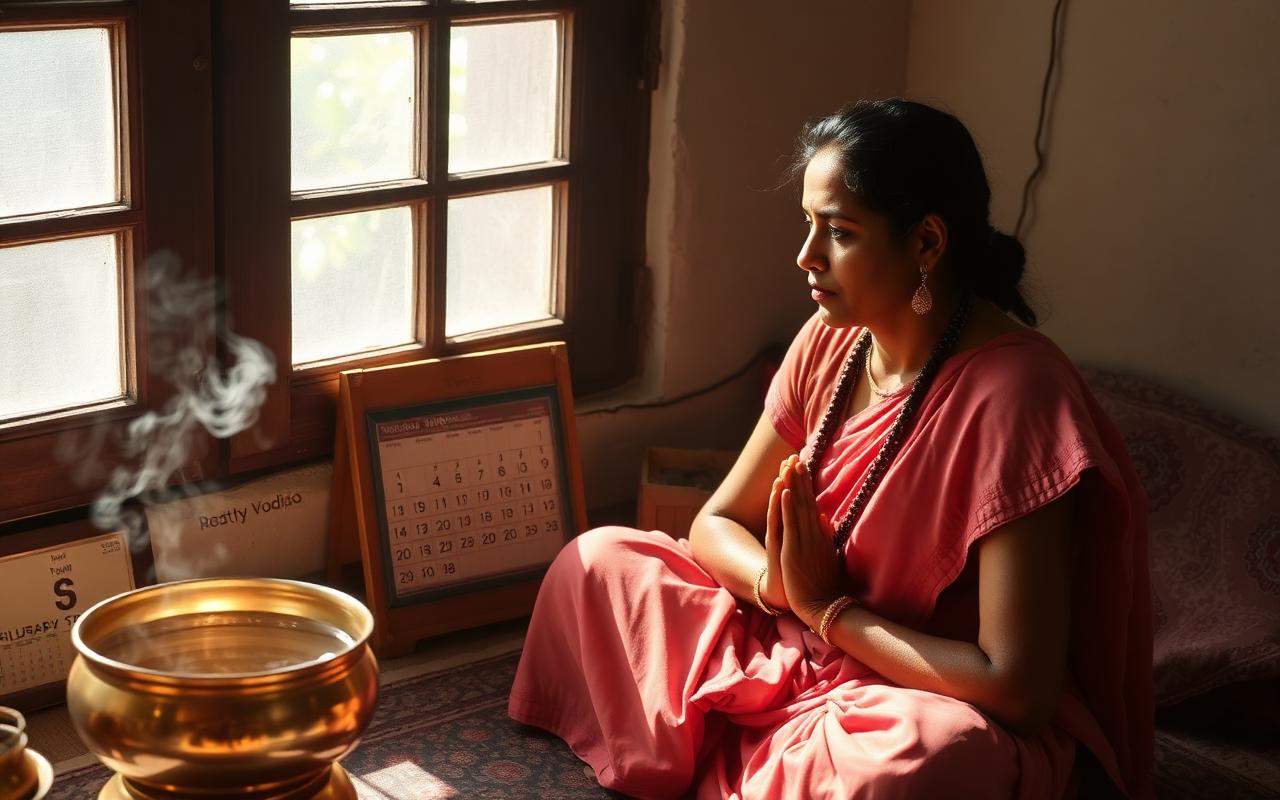
When is the mantra prescribed? Most often during serious illness - many Indian families chant it in shifts at a hospital bedside. During Sade Sati, the seven-and-a-half year Saturn transit. During Ashtama Shani, when Saturn transits the 8th house from the Moon. During an Antardasha of an afflicted Mars, Saturn, Rahu, or Ketu. After surviving an accident, as a thanksgiving practice. Before any surgery. For any chronic disease. And, simply, as a daily practice for general protection and inner stability.
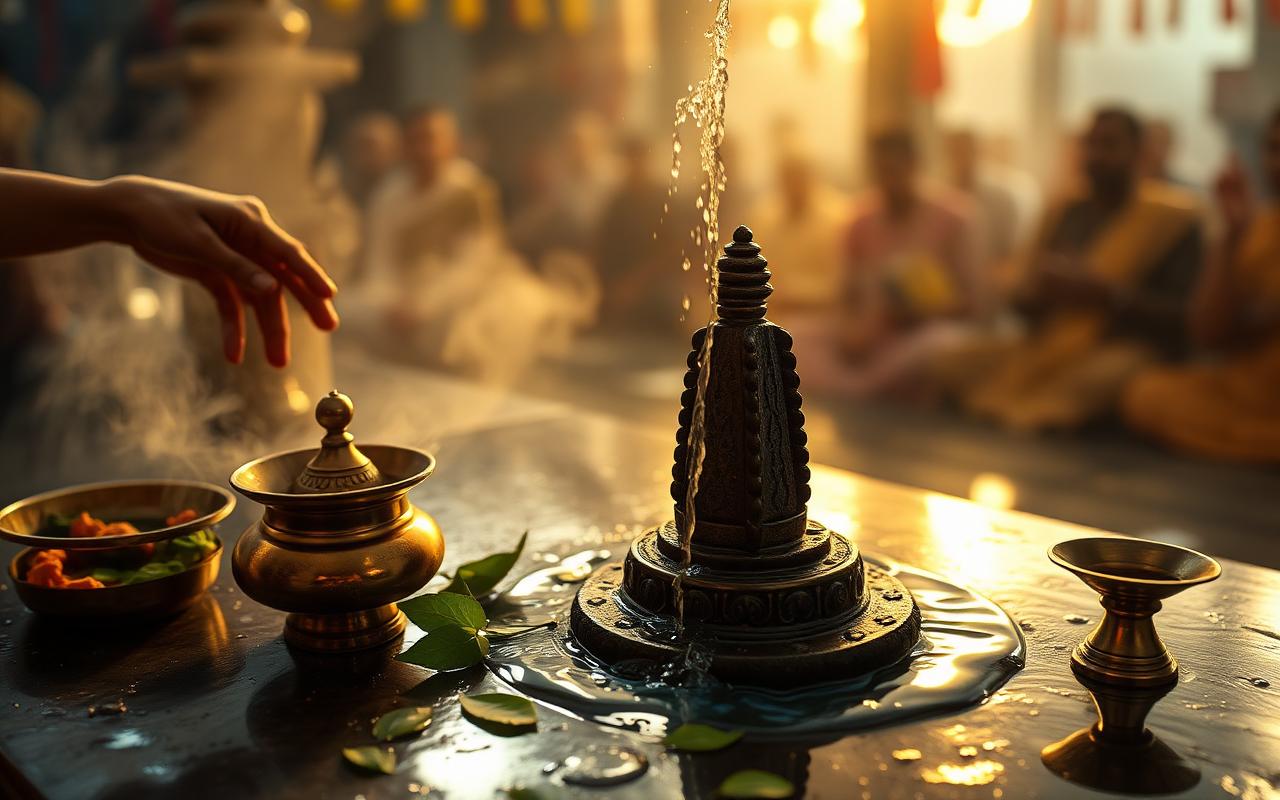
The classical method is precise. Sit facing east before sunrise. Use a Rudraksha mala of 108 beads - ideally 5-Mukhi or, for advanced practitioners, a Mahamrityunjaya mala that combines specific Mukhis. Place a small Shiva idol, a lingam, or simply a printed image in front of you. Light a ghee lamp. Offer a few bilva (bael) leaves. Then chant the mantra 108 times, slowly, paying attention to each word.
For serious purposes the chant is repeated 1,008 times across nine days, or 125,000 times across a longer Anushthana with the help of a priest. For a hospital bedside, even a single round of 108 chanted by a family member each morning is enough to noticeably steady the patient.
Pronunciation matters more than people realise. Each syllable in a Vedic mantra is a Bija - a seed - and the seed sprouts only if planted correctly. If you have never been taught the mantra by a teacher, find a recording by a traditional Brahmin reciter (the Art of Living and Isha Foundation recordings are both reliable starting points) and listen to it daily for a week before trying to chant yourself. Match your pronunciation to theirs.
Some practitioners pair the mantra with the Mahamrityunjaya Yantra - a precise geometric diagram inscribed on copper or silver, energised through the mantra and installed at the Ishanya (north-east) corner of the home or in the puja room. The combination of the chant and the installed Yantra creates a continuous field of the mantra's frequency in the space.
What happens with consistent practice? The first effect, almost everyone notices within a few weeks, is a settling of the nervous system. Sleep improves. The mind catastrophises less. The second effect, slower, is a sense of being held - that whatever happens, there is a deeper container around the life. The third effect, slower still and reported by long-term practitioners, is a softening of the fear of death. Not a denial of death - a softening of the fear.
At Shree Pitambra Vidya Gurukulam, we offer guided Mahamrityunjaya Anushthana for clients facing serious illness, difficult planetary transits, or simply seeking a deeper daily practice. Whether you do it on your own or with our priests, this is one mantra that asks nothing of you except that you sit down and chant it. The rest, the mantra does itself.
Want personal guidance on this?
Speak to an acharya for a chart-based consultation tailored to your situation.
Frequently Asked Questions
Is the guidance in "The Mahamrityunjaya Mantra: Meaning, Method, and Miracles" authentic and lineage-based?+
Yes. Every article on VedicAstroTalk is written by lineage-trained acharyas of Shree Pitambra Vidya Gurukulam and cross-checked against classical Sanskrit texts such as Brihat Parashara Hora Shastra, Phaladeepika, and Jaimini Sutras before publication.
How can I get a personal reading based on this topic?+
Book an Astrological Consultation from our consultations page. You will receive a sidereal chart (Lahiri ayanamsa), a 20-year Vimshottari Dasha map, and a written remedial protocol tailored to your birth details.